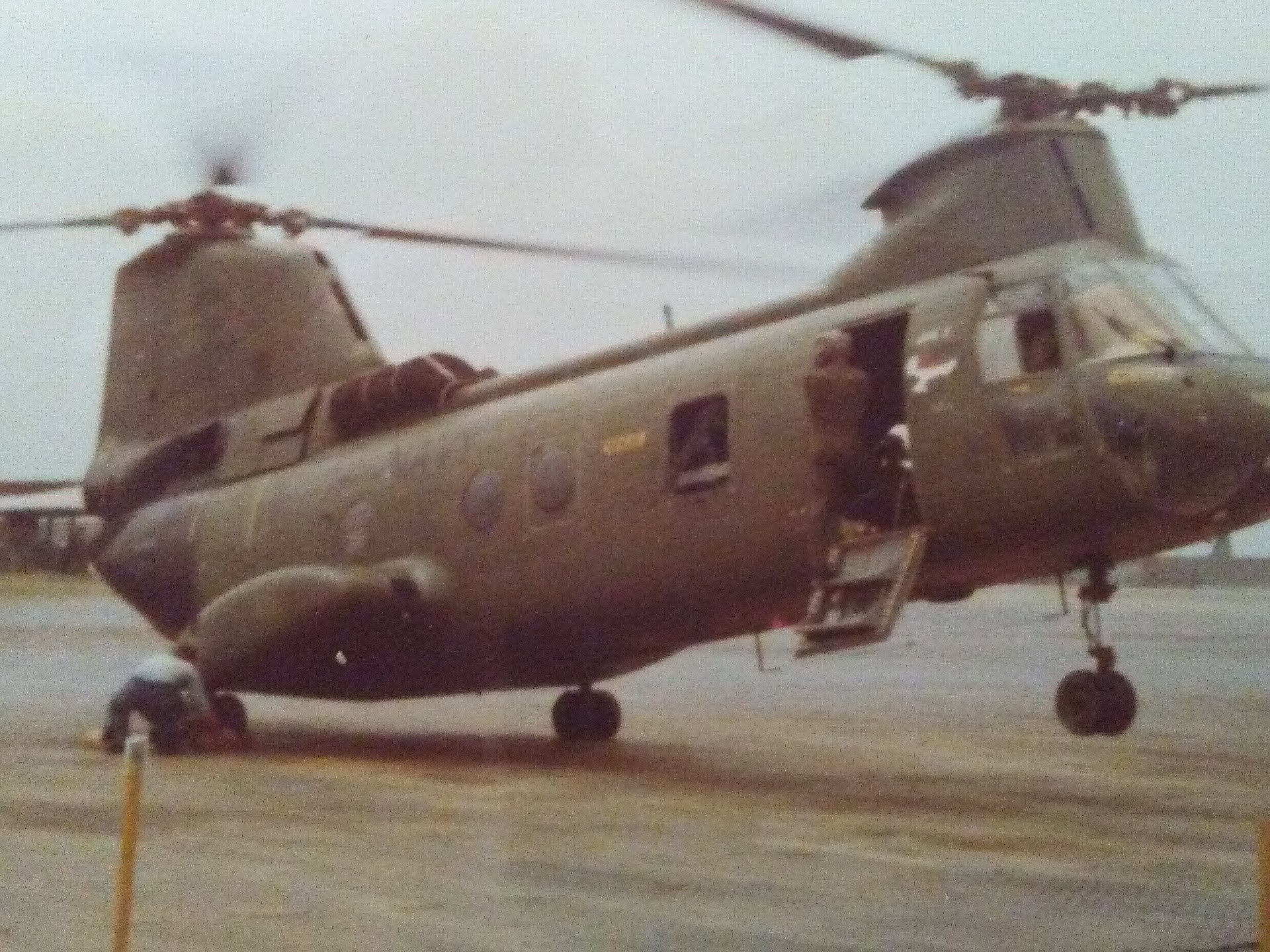
Veterans Day honors all who have served in the U.S. Armed Forces, those who answered the call, wore the uniform, and returned home after their duty. It’s a day to recognize their courage, sacrifices, and the challenges many faced upon returning, sometimes with an ungrateful welcome. Meet Bill Hill, a 1968 Saline High School graduate who served in Vietnam. This is his story.
Hill learned shortly after graduation that his draft lottery number was 11. That meant without a deferment, he could be drafted and deployed to Vietnam within the next three – to – six months. Given that reality, Bill, along with five other grads from Saline, enlisted. Four served in the Navy and two in the Marines.
“I had intended to go to college and was enrolled at Washtenaw Community College. It took me about thirty days to realize that I did not have the patience to be a student at that time,” Hill said. “To get a deferment from military service you needed political connections, be a full-time student enrolled in college or be married with a child. I was none of these.”
In November 1968, Hill traveled to the Chicago area for boot camp. Hill’s focus was on naval aviation as a survival equipment specialist. Survival equipment included all flotation devices, from life jackets to 28-man rafts, oxygen tanks, helmets, parachutes and shark repellent. His job was to ensure that all aviation survival equipment was operational.
Hill’s first deployment was at the Naval Air Station in Alameda, California, that included 10,000 civilian employees. “There were four aircraft carriers stationed there. The helicopters I worked on were located at the other end of the base,” Hill said.
Hill joined the Navy because he wanted to “see the world,” so he volunteered for sea duty. He was disqualified to serve on “Operation Deep Freeze”, supporting scientists on Antarctica due to wearing glasses. In 1971, he received his deployment orders.
He was being sent to Vietnam.
Hill received training, passed the required tests, and was designated crew chief and would be flying on a CH-46 helicopter. As a crew chief, he flew missions in every part of Vietnam. The crew chief sits behind the pilot and co-pilot.
In addition to being responsible for all on-board maintenance for the copter, “I also manned a M-16 machine gun, a M-50 gun out of the tail,” Hill said. “We flew to five different aircraft carriers, delivering soldiers we rescued who were under fire.”
“There were times when things were pretty [expletive],” Hill said quietly. “The pilots sat on reinforced seats that offered protection. My seat was made of canvas. So, I filled two ammo cans with sand and set those under my seat, along with three flak jackets. That provided me with a little protection.”
“I can’t explain it but I couldn’t sleep on a ship,” he said. “I slept outside on the deck under my helicopter. I had to be near my machine gun, my revolver.”
Hill described many times when his copter was under heavy enemy gunfire. “We were under attack and the pilot and copilot were hit in their arms and legs. I wasn’t hit because the bullets were stopped by the sand in the ammo cans.” He described his fear as bullets hit the copter from below and exited out the roof.
Hill recalled the time his copter was downed by enemy fire, though he wasn’t on it when it went down. Marines were nearby and rushed to protect the copter and men. Hill flew on another mission that repaired the downed copter and evacuated the soldiers.
Following his discharge, there was no decommissioning period. There was no one for a recently discharged sailor to talk to. Soldiers left the base and were on their own. “I was walking just outside the base in Oakland when two cars drove by and people spit on me, calling me a baby killer,” Hill said. “That was welcome home.”
“Upon leaving the service, I took a look at my life,” Hill said. “I decided to do whatever I wanted to do so I could keep learning.” Hill retired as a Amy Major, an Officer – 4 pay scale. He learned to fly and taught countless others to fly.
Hill acknowledges he has suffered from Post Traumatic Stress Disorder (PTSD) that still causes him nightmares. “They are not as frequent, but I still get them,” Hill said. “I used to fight in bed while sleeping. My wife had to sleep on the sofa because of it.”
Hill has been married to Lana for 48 years. “She has suffered too but has hung in there with me through it all,” Hill said. “If I were to die tomorrow, I know I have lived a good life.”
On behalf of a grateful nation, Major Hill, thank you. And a belated “Welcome Home Soldier.”





 8123 Main St Suite 200 Dexter, MI 48130