The Huron River Watershed Council (HRWC) is hoping some local townships, specifically ones in the Chain of Lakes, consider putting in place an ordinance that would put some restrictions on the application of fertilizer.
The Lyndon Township Board looked at such an ordinance at their Feb. 10 meeting. The Sun Times News (STN) followed up with township supervisor Pam Byrnes about this.
Byrnes said they are reviewing an ordinance on fertilizer, but any decision on it was postponed until the next meeting in order for some editing of its wording. She said the HRWC has approached several townships in this area, including some in Livingston County, to prevent application of commercial fertilizers within certain areas of the watershed. It’s modeled after a similar ordinance from Hamburg Township, which does have farmers exempt.
In his report to the Lyndon Township board, township zoning administrator Scott Pacheco said the HRWC is also working with neighboring townships Putnam, Unadilla and Dexter townships on the ordinance.
To learn more about the ordinance, Byrnes directed STN to connect with David Lossing, Director of Government Relations at the HRWC.
Lossing said they have been working with Lyndon Township the past few months to adopt the ordinance as a means of reducing nutrient loading into the Huron River watershed as a whole.
In giving some background, Lossing said two years ago, his colleague Paul Steen, worked with the former supervisor of Hamburg Township, Pat Hohl, to draft and have adopted the first fertilizer ordinance. He said last summer, prior to Supervisor Hohl’s retirement, he spoke at the Huron Rive Chain of Lakes Association annual meeting and “challenged” his peers to adopt Hamburg’s fertilizer ordinance throughout the region as an overall goal of reducing nutrient loading into the watershed.
Lossing said there are two main points in the draft ordinances: 1) Banning applying fertilizer within the 50 foot high water mark of a water body year round; and 2) Not allowing application of fertilizer on parcels adjacent to waterways between November to May 1st each year.
He said the Nov-May timeline makes sense because any fertilizer applied likely runs off into the water during rain or snow events because the ground cannot absorb the fertilizer and it adds to potential algae blooms in inland lakes.
The ordinance would impact riparian property owners on tributaries, rivers, streams or lakes within the township. It doesn’t apply to those who don’t live on water bodies.
Lossing said farmland is exempt from this ordinance and there is language in the ordinance stating such.
“Under the Right to Farm Act in Michigan, farmland owners already work closely with the Michigan Department of Agriculture and Rural Development and the Michigan Department of Environment, Great Lakes and Energy on the application of fertilizer and local governments do not have the authority in this area,” Lossing said.
He said there were three farmers at the Lyndon Township board meeting and they raised this concern and they assured them that they are exempt.
“We did appreciate their participation in the discussion,” Lossing said. “Farmers are already excellent stewards of their lands and understand the unique role they play in our economy and environment.”
So the HRWC has been discussing the potential issue with Putnam Township, Unadilla Township, Lyndon Township and Dexter Township. Lossing said the first three townships already have a draft fertilizer ordinance for review with Lyndon Township being the first to place it on their meeting agenda. Lossing said Lyndon has a revision to make and it will likely be back on their board meeting on March 10.
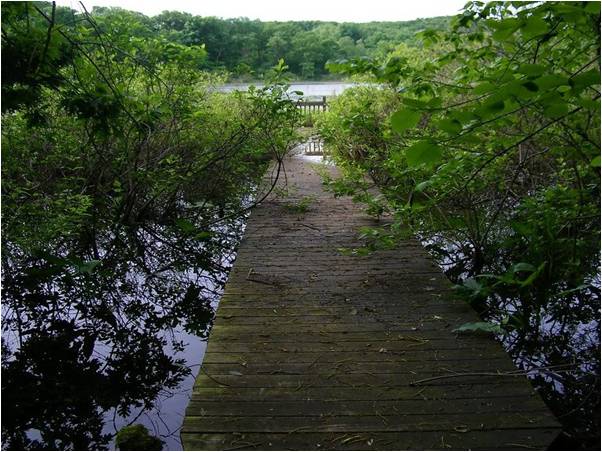
Photo: A water’s edge in Lyndon Township. Photo courtesy of the Lyndon Township webpage





 8123 Main St Suite 200 Dexter, MI 48130